Ef þú ert með bauga undir augunum að þá getur það verið merki um skort á K2 vítamíni
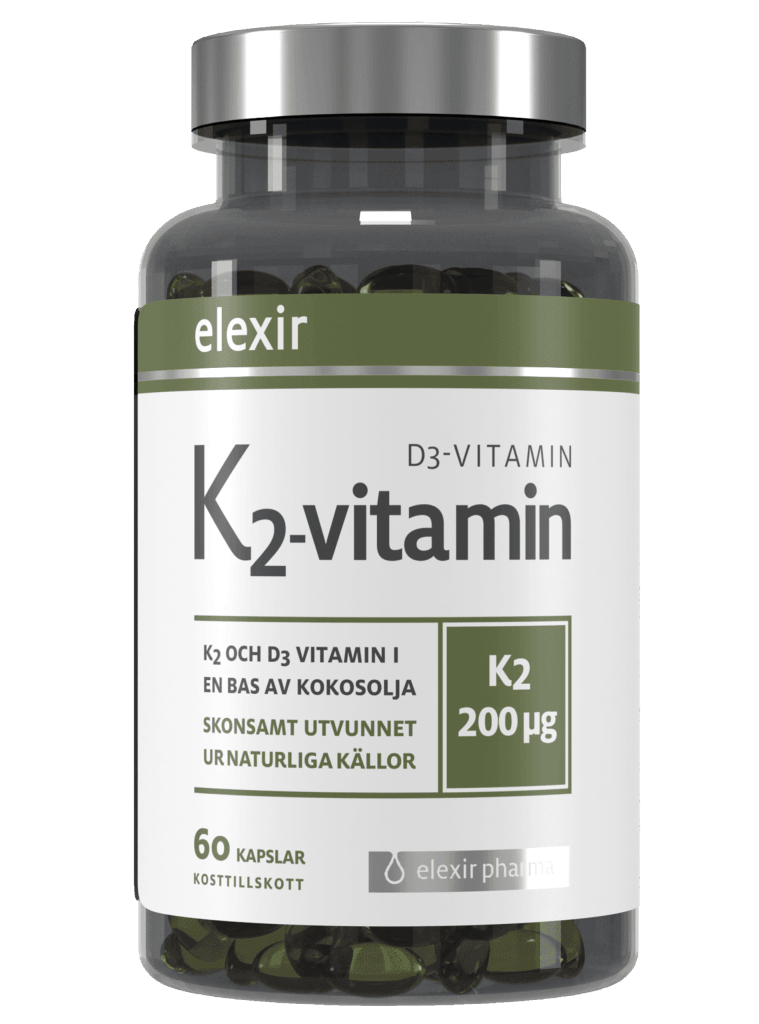
Contains a natural form of vitamin K2, menaquinone-7, which contributes to normal blood clotting and the maintenance of normal bones. Vitamin K2 is supplemented with vitamin D3 as vitamin D3 contributes to the normal absorption/utilization of calcium and phosphorus, to the maintenance of normal bones and to the normal function of the immune system. As both vitamin K2 and vitamin D3 are fat-soluble vitamins, a base of coconut oil contributes to the best possible absorption in the body.
What does vitamin K2 do in the body?
Vitamin K2 has several important functions in the body, including maintaining good cardiovascular health, reducing inflammation, but also for the distribution of calcium in the body.
The important role of vitamin K2 for the skeleton
Vitamin K2 plays an important role in the body as a conductor of the mineral calcium. Calcium plays an important role in building strong and stable bones, but in order to do so, the mineral needs to reach the bones first. Vitamin K2 helps control where in the body the calcium goes. It is important that calcium is transported out of the bloodstream and into the skeletal tissues to strengthen the bones. Otherwise, if calcium remains in the bloodstream, it can contribute to atherosclerosis. In this way, vitamin K2 plays an important role in building strong and resilient bones.
Vitamin K2 and vitamin D3 in symbiosis
Vitamin D3 has the ability to increase the availability and uptake of calcium in the body, which means that there is more mineral to strengthen the bones. Together with vitamin K2, which directs where the calcium goes, vitamin D3 and vitamin K2 are powerful together in strengthening the bones.
Vitamin K2 and D3 in menopause
Vitamin K2 is an important vitamin for everyone, but it can be particularly important for women in the menopause. As women get older, the production of the hormone oestrogen in the body decreases and the risk of osteoporosis increases. It is therefore important to ensure a steady intake of vitamin K2 and vitamin D3 to support calcium in the body and maintain strong bones.
Fun fact
Vitamin K is actually the result of Nobel Prize-winning research conducted in 1929, when a vitamin was discovered that was essential for blood coagulation, i.e. the ability of blood to solidify. Because the vitamin was linked to coagulation, it was named vitamin ‘K’ as in ‘coagulation’.
| Vitamin K2 | |
| Vitamin D3 | 10 μg |
Ingredients: MCT oil (coconut), capsule (bovine gelatin), consistency enhancer (glycerol), vitamin K2 as menaquinone-7 (fermented natto), colorants: iron oxides and hydroxides, cholecalciferol (vitamin D3).
Recommended daily intake for adults: 1 capsule daily with meals.
Number of doses per pack: 60
The recommended daily intake should not be exceeded. Food supplements do not replace a varied diet but should be combined with a varied and balanced diet and healthy lifestyle. Store in a dry place at room temperature, protected from sunlight. Keep out of the reach of small children.
Are there more vitamin K vitamins?
There are three different vitamins K, K1 (phylloquinone), K2 (menaquinone) and K3 (menadione). About 90% of vitamin K in the diet is vitamin K1 while vitamin K2 accounts for about 10%. Vitamin K3 is mostly produced synthetically but our gut bacteria can produce K3 from K1 to some extent.
What type of vitamin K2 does Elexir K2 contain?
Menaquinone-7 (MK-7). K2 is made up of a group of menaquinones, so our supplement contains the menaquinone-7 form. It is this form that is absorbed by the body most effectively and has been studied the most.